
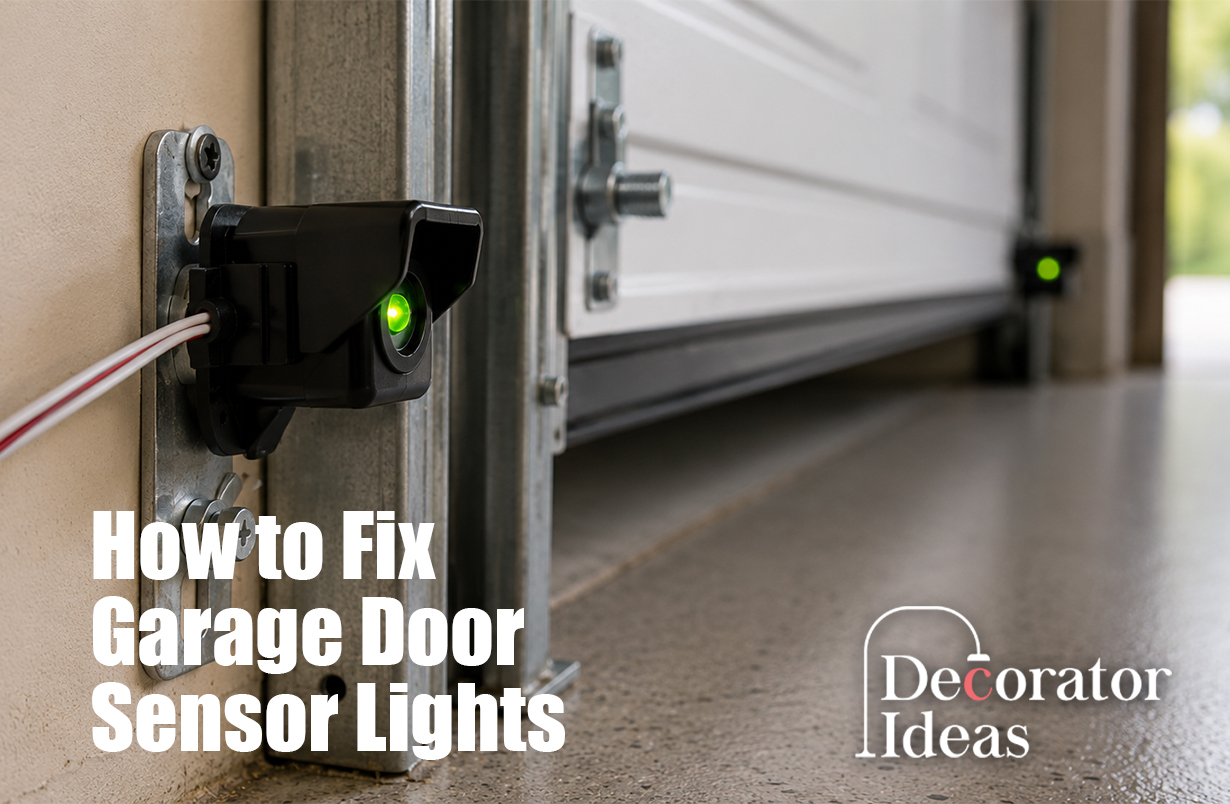
A garage door may open normally but refuse to close when its safety sensor lights are off, blinking, or weak. Common causes include dirt, poor alignment, loose wires, sunlight, or a failed sensor. Learning How to Fix Garage Door Sensor problems can save time and help keep your home safe. The steps below explain the lights, safe checks, and when to call a professional.
How Garage Door Sensor Lights Should Work
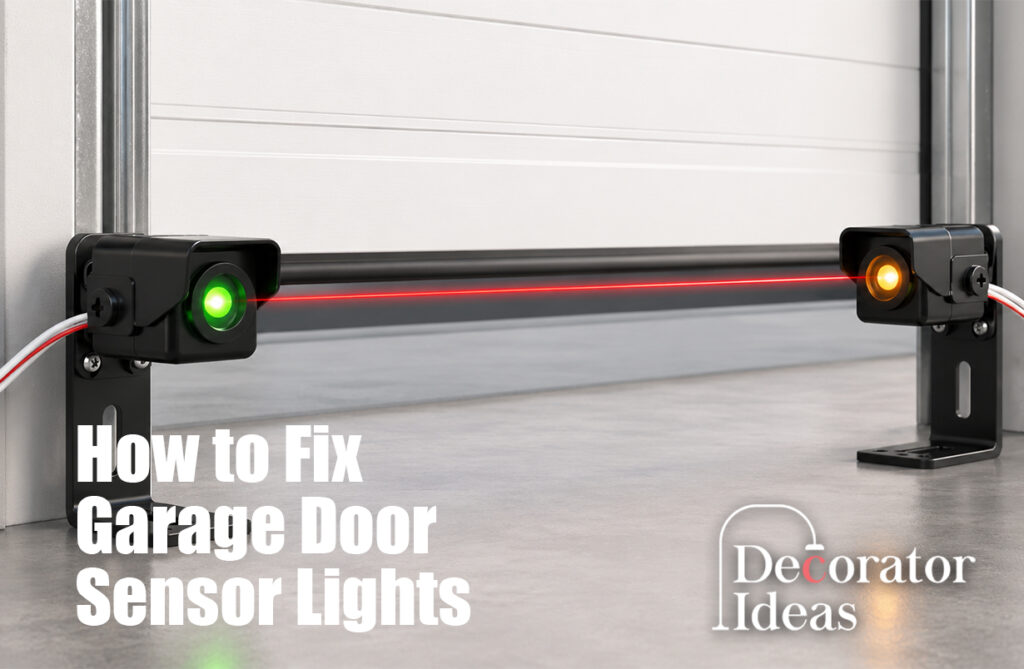
Garage door safety sensors are small devices placed near the bottom of both door tracks. One sensor sends an invisible beam, and the other receives it. When the beam is clear, the opener allows the door to close. If something blocks it, the door should stop or move back up.
On many Chamberlain and LiftMaster systems, one sensor has an amber light and the other has a green light. Both lights should usually stay solid. Other brands differ, so check your model’s manual.
Why Garage Door Sensor Lights Are Off or Blinking
A blinking light usually means the sensors are not facing each other correctly. A completely dark light can point to a power problem, broken wire, loose terminal, or damaged sensor. If both are off, the opener may lack power or the circuit may be disconnected.
The door may also close only while you hold the wall button. This often means the opener cannot confirm that the safety beam works. Do not treat this as a normal operating method, and never bypass the sensors with tape or wires.
Check for Obstructions and Clean the Lenses
Start by looking across the garage opening at sensor level. Remove boxes, tools, leaves, cobwebs, snow, and other items blocking the beam. Even a small object close to the floor can stop the door from closing.
Next, wipe both sensor lenses with a soft, dry cloth. Do not spray cleaner directly onto them. Check for grease, water, paint, or scratches. This simple step is often the fastest part of How to Fix Garage Door Sensor issues, especially in dusty or busy garages.
Realign the Garage Door Safety Sensors
A sensor can move after being hit by a broom, bicycle, rubbish bin, or car tire. Look at both brackets and make sure the sensors are at the same height. Their lenses should point directly toward each other across the door opening.
Loosen the wing nut or mounting screw slightly. Move the blinking sensor slowly until its light becomes solid. Then tighten the hardware without changing its position. A string and level can check height, but the light is the best final guide. Do not tighten plastic brackets too hard because they may crack.
Inspect the Sensor Wires and Power Connections
Before touching wires, unplug the opener and disconnect its backup battery. Follow each low-voltage wire to the opener. Look for cuts, loose staples, bare copper, corrosion, and pulled wires.
Check the connection at the opener as well. Each wire should sit firmly in the correct terminal. Match striped wires with striped wires and plain wires with plain wires. When learning How to Fix Garage Door Sensor wiring, always use the model’s wiring diagram instead of guessing.
Fix Sunlight, Moisture, and Vibration Problems
Strong sunlight can shine directly into the receiving sensor and disturb the beam. The door may work in the morning but fail in the afternoon. Hold cardboard near the sensor to create shade, but do not block the beam. If the light becomes solid, fit a suitable shield.
Check for rain, cleaning water, condensation, snow, or leaks. Dry the sensor and inspect its housing for cracks. Also watch the sensor lights while the door moves. If a light flickers, a loose bracket or shaking track may be moving the sensor out of alignment.
Test Whether the Sensor Is Faulty
After cleaning, aligning, and checking the wires, restore power and look at the lights. If one sensor remains dark while the other works, the dark sensor or its wire may be faulty. If both remain dark, check the outlet, breaker, plug, and opener terminals.
A technician can test the sensors with short, known-good wires. If they work, the original garage wiring is likely damaged. If they still fail, the sensor pair or control board may be bad. Do not try this electrical test unless you understand the system.
Replace Bad Garage Door Sensors Safely
Buy sensors that match the opener’s brand, model number, and manufacture date. Parts that look similar may not communicate correctly with your opener. Replacing both as a matched pair is often best.
Open the door fully, disconnect power, photograph the old wiring, and remove the damaged sensors. Install the brackets and connect wires exactly as shown in the manual. Restore power, align the lenses, and tighten the brackets. Replacement is part of How to Fix Garage Door Sensor failures that cleaning cannot solve.
Test the Garage Door After the Repair
With the door open, place a box or piece of wood in the path of the sensor beam. Press the remote. The door should not close normally while the beam is blocked. Remove it, start closing the door, and block the beam again. The door should stop and reverse.
Never use your hand, foot, child, or pet for this test. If the door continues moving through a blocked beam, stop using the automatic opener. A solid light alone does not prove the full system works, so always complete this test.
When to Call a Garage Door Professional
Call a qualified technician if the lights stay off after power and wiring checks, the control board looks burned, or the problem keeps returning. Get help if the door is off its tracks, uneven, noisy, or very heavy.
Do not touch springs, lifting cables, drums, or bottom brackets. These parts hold strong tension and can cause serious injury. A heavy or unstable door may have another fault that needs expert repair.
FAQs
Why is one garage door sensor light off?
The sensor may have no power, a loose wire, a broken connection, or internal damage. Check its wire and terminal connections before replacing the sensor.
Why is my garage door sensor light blinking?
A blinking light usually means poor alignment or a blocked beam. Dirt, direct sunlight, vibration, and moisture can also make the light blink.
Can I close the garage door with bad sensors?
Some openers allow temporary closing when you hold the wall button. Keep the full door in view and repair the safety sensors as soon as possible.
Should both garage door sensor lights be green?
Not always. Many systems use one amber light and one green light. Check the owner’s manual for the correct colors on your opener model.
Can I bypass garage door safety sensors?
No. Bypassing the sensors removes an important safety feature. It may allow the heavy