Thrips are tiny insects, but they can cause large problems on houseplants, flowers, vegetables, and young garden plants. They scrape plant cells and leave silver marks, brown edges, weak growth, and damaged flowers. Insecticidal Soap for Thrips can help when it touches the pests directly. It is simple to use, but good timing, full coverage, and repeat treatment are important. This guide explains how it works, how to apply it safely, and how to improve your results.
How Insecticidal Soap Works Against Thrips
Insecticidal soap is usually made with potassium salts of fatty acids. These ingredients damage the soft outer layer of small insects. When the wet spray covers a thrips, the pest loses water and dies. The soap works by contact, so it does not move through the plant. It also has very little effect after it dries. This means the spray must touch the insect while it is still wet.
The treatment works best on exposed young thrips and adults. It may not reach eggs because female thrips often place them inside plant tissue. Some early stages also hide in flowers, folded leaves, buds, or soil. For this reason, one spray may lower the population but may not remove every pest. Careful follow-up is a key part of control.
How to Identify Thrips Before Treatment
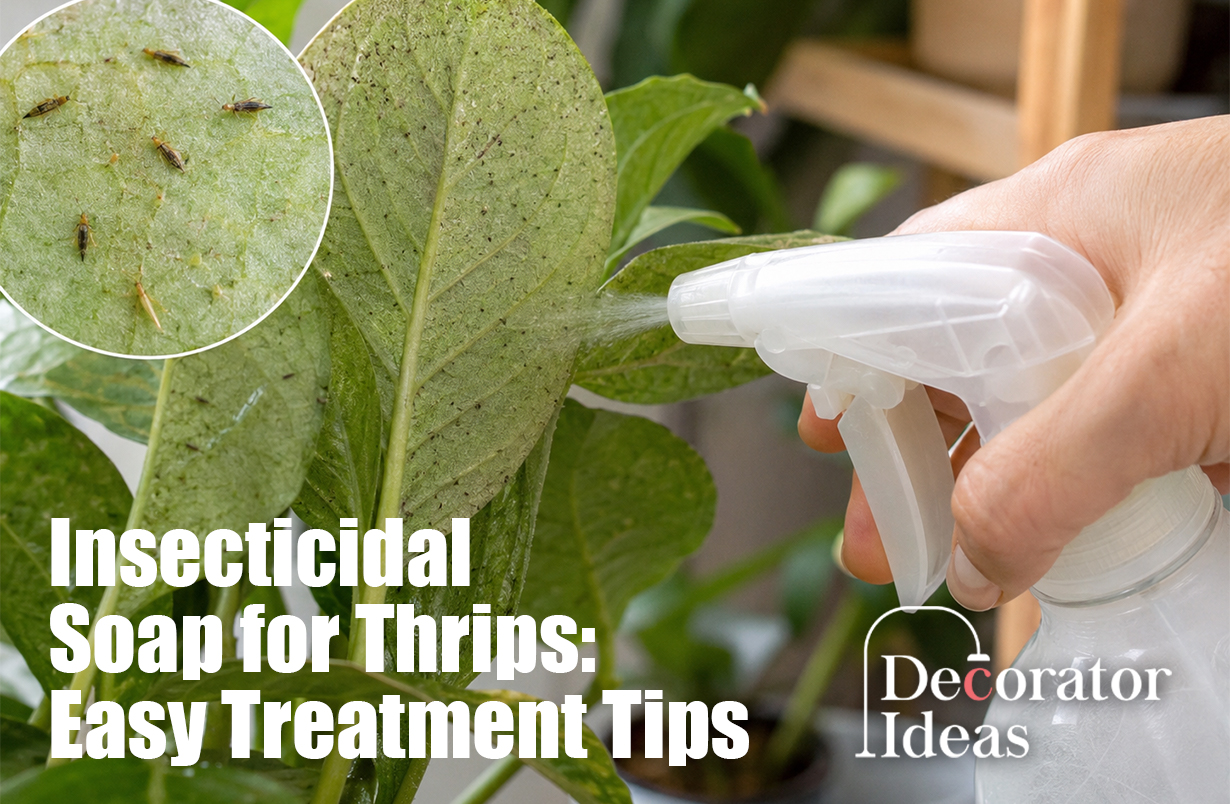
Thrips are tiny, narrow insects that may look like yellow, brown, or black lines. They hide under leaves, inside flowers, near buds, and around new growth. Use a hand lens, or hold white paper under a leaf and tap the plant. Small moving marks may be thrips.
Common damage includes silver streaks, pale patches, black waste spots, twisted leaves, and brown flower edges. Old damage will not disappear, so look for live insects and fresh marks. Yellow or blue sticky cards can track adults, but they cannot control all life stages.
How to Choose the Right Insecticidal Soap
Choose a commercial product labeled for your plant and for thrips or other soft-bodied insects. Ready-to-use sprays suit small collections. Concentrates may suit larger areas, but measure and mix them exactly as directed.
Do not replace it with dish soap or laundry detergent. Household cleaners may contain fragrances, dyes, degreasers, or strong surfactants that burn leaves. A commercial product has a tested formula, rate, and safety directions.
How to Apply Insecticidal Soap for Thrips
Move an infested houseplant away from healthy plants. Remove badly damaged flowers, buds, and leaves, and seal them in a bag. When suitable, rinse the plant with gentle water to knock off many thrips.
Shake or mix the product only as the label directs. Spray the tops and undersides of leaves, stems, new growth, leaf joints, and allowed flower areas. Aim for even coverage, not heavy dripping. Insecticidal Soap for Thrips works only when the wet spray touches the pest, so move around the plant and spray from more than one angle.
How Often to Repeat the Treatment
Repeat applications are often needed because hidden eggs can hatch after the first spray. Follow the label for safe intervals. Spraying too often or using a stronger mix can injure the plant.
Check every few days for live thrips, fresh silver marks, and adults on sticky cards. Healthy new growth is a good sign. Watch nearby plants because thrips can move between them.
Best Time to Spray Plants for Thrips
Spray when the plant is well watered, healthy, and not wilted. For outdoor plants, early morning or evening is often a good time because temperatures are lower and strong sunlight is limited. Avoid spraying before rain, since water may wash the product away before it works.
Do not treat plants in very hot weather or during drought stress. Heat, sun, and strong mixtures increase leaf burn. Indoors, provide airflow, and keep children and pets away until leaves are dry.
Common Mistakes That Reduce Treatment Results
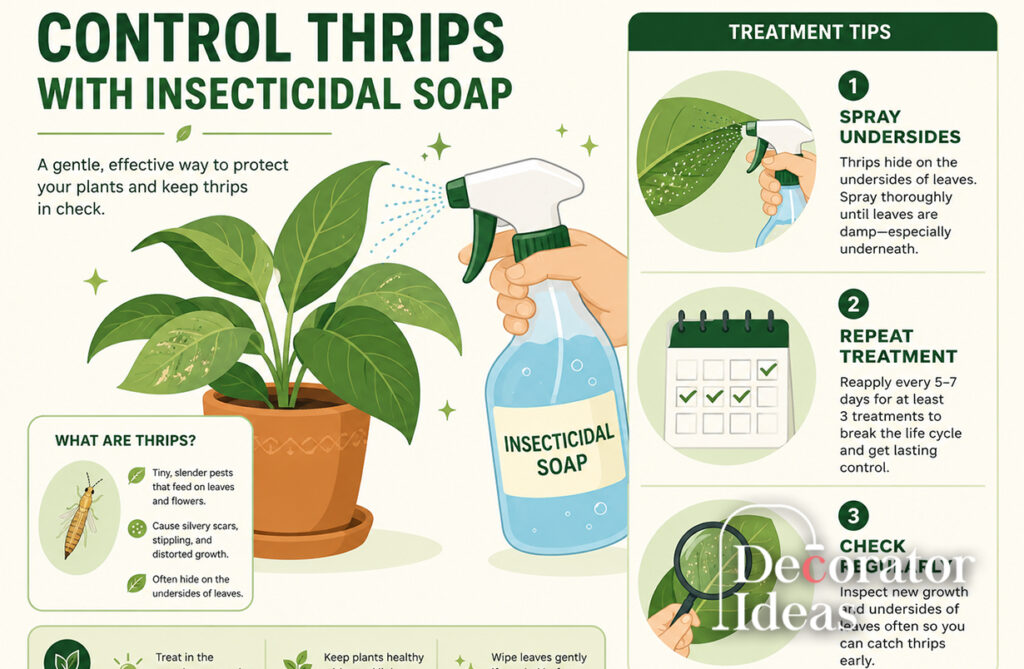
The most common mistake is spraying only the upper side of the leaves. Thrips often hide underneath leaves and inside protected plant parts. Another mistake is stopping after one treatment. Eggs and hidden stages may survive, so regular checks and label-approved repeat sprays are important.
Other problems include using dish detergent, spraying a dry or stressed plant, mixing soap with oil without approval, and treating in strong sunlight. Do not expect damaged leaves to become healthy again. Judge success by fewer live thrips, fewer new marks, and stronger new growth.
Plants That May Be Sensitive to Insecticidal Soap
Sensitive plants may include certain ferns, palms, succulents, begonias, ivies, gardenias, and soft or hairy-leaved plants. Delicate flowers may also develop brown marks.
Test one or two leaves first and follow the label’s test period. Stop if you see yellowing, brown spots, curling, or wilting. Plant type, weather, water quality, and product strength affect sensitivity.
Other Ways to Control Thrips Alongside Soap
Good thrips control usually combines several simple methods. Isolate infested plants, prune heavily damaged growth, rinse leaves, remove fallen plant material, and inspect new plants before adding them to your collection. Sticky cards can show whether adult activity is going up or down.
Healthy plants recover faster, so provide correct light, water, drainage, and airflow. Avoid too much nitrogen fertilizer. Outdoors, protect lacewing larvae, predatory mites, and minute pirate bugs by avoiding unnecessary broad-spectrum pesticides.
When Insecticidal Soap Is Not Enough
Soap may fail when many plants are infested, pests hide deep in flowers, or they return after correct treatments. Remove badly infested plants or consider another labeled option. Depending on local rules, choices may include horticultural oil, neem-based products, biological controls, or spinosad.
Thrips can also spread plant viruses. If a plant has strange rings, severe leaf distortion, dark stem areas, or unusual yellow patterns, isolate it quickly. A pesticide cannot cure a virus. Seek local expert advice before using stronger controls, especially on edible crops, valuable plants, or a large greenhouse collection.
Frequently Asked Questions
Does insecticidal soap kill thrips eggs?
It usually does not kill many eggs because thrips often place them inside leaves, flowers, or stems. Repeat treatment can target the young insects after they hatch.
Can I use dish soap instead?
It is better to use a labeled commercial product. Dish soap may contain strong cleaning chemicals that can burn leaves or harm delicate flowers.
How fast does the treatment work?
Thrips that receive full contact with the wet spray may die quickly. However, complete control can take longer because hidden insects and protected eggs may survive.
Should I spray the soil?
Only spray the soil if the product label tells you to do so. Most insecticidal soaps are designed for plant surfaces, not for soaking potting mix.
How can I tell if the treatment worked?
Look for fewer live thrips, lower sticky-card counts, less fresh silver damage, and healthy new leaves. Old damage will remain on the plant.