Removing old wallpaper often leaves a sticky layer behind. This residue can make the wall feel rough and may cause new paint to peel, crack, or look uneven. Learning How to Remove Wallpaper Glue with warm water helps you prepare a clean surface without using strong chemicals. The method is simple, affordable, and suitable for many common wallpaper adhesives when completed with patience and care.
Why Warm Water Softens Wallpaper Glue
Many traditional wallpaper adhesives contain starch or cellulose. These materials become soft when they absorb moisture. Warm water enters the dry glue and changes it into a loose, slippery paste that is easier to wipe away.
Warm water usually works better than cold water because heat speeds up the softening process. However, the water should not be boiling. Very hot water can burn your skin and may damage paint, drywall paper, or nearby wooden trim.
This method works best on thin, water-based glue. Very old, thick, or heavy-duty adhesive may need several treatments. A commercial wallpaper remover may be required when warm water cannot break down the residue.
Tools and Materials You Will Need
Prepare all your supplies before starting. You will need a bucket, warm water, clean sponges, microfiber cloths, rubber gloves, old towels, and a plastic scraper. A spray bottle can also help you apply water to small areas.
You may add a few drops of mild dish soap to the water when the glue feels greasy or very sticky. Avoid using too much soap because leftover cleaner can affect primer and paint.
You should also have plastic sheeting or a waterproof drop cloth. Wallpaper paste can drip onto flooring, baseboards, electrical covers, and furniture while you work.
How to Prepare the Room and Wall
Move furniture away from the wall and cover the floor. Place old towels along the baseboard to collect dirty water. Remove pictures, nails, outlet covers, and switch plates when it is safe to do so.
Turn off the electricity connected to the outlets and switches on the wall. Water should never enter an electrical box. Near these areas, use a damp cloth instead of spraying the wall directly.
Check that all wallpaper and backing paper have been removed. Small pieces of backing may look like dried glue. Wet a hidden spot and test it. If the material lifts in thin layers, remove the remaining paper before cleaning the adhesive.
How to Remove Wallpaper Glue Safely
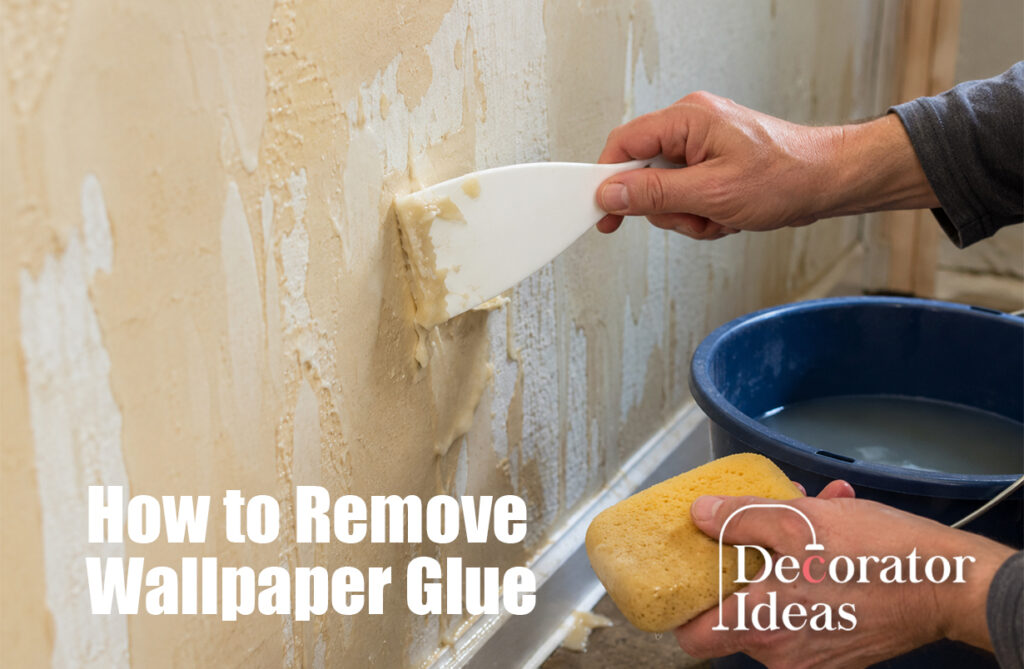
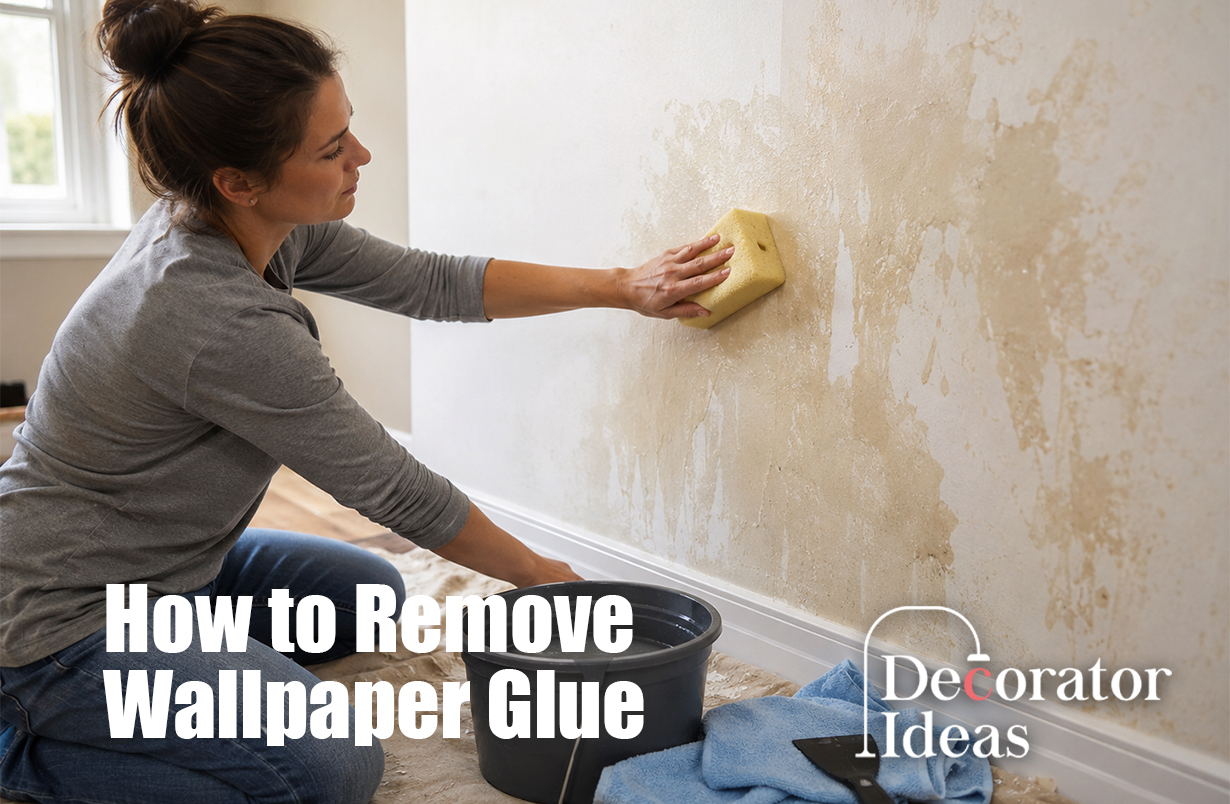
Fill a bucket with comfortably warm water. Dip a sponge into the water and squeeze out the extra liquid. The sponge should be wet enough to soften the glue but should not send large amounts of water down the wall.
Work on a section about two to three feet wide. Starting at the top, press the sponge against the glue and move downward. Apply enough water to make the surface evenly damp.
Leave the warm water on the glue for five to fifteen minutes. Do not let the section dry completely. Apply more water when needed, but avoid soaking the wall, especially when working on drywall.
How to Wipe and Scrape the Softened Glue
When the adhesive feels soft, gummy, or slippery, wipe it with a clean sponge or microfiber cloth. Use gentle circular movements. Rinse the sponge often so you do not spread the glue back across the surface.
Change the water when it becomes cloudy, thick, or sticky. Clean water removes adhesive more effectively than a bucket filled with dissolved paste and wallpaper pieces.
For thick areas, hold a plastic putty knife almost flat against the wall. Push it gently under the softened glue. Never force the scraper through dry adhesive because this can tear drywall paper or scratch plaster.
How to Treat Stubborn Wallpaper Glue
Some adhesive will not come off after one treatment. Apply warm water again and give it more time to soften. Several light treatments are safer than one heavy soaking, especially on drywall.
A few drops of mild dish soap may help loosen difficult residue. Mix it into fresh warm water, apply it with a sponge, and wait several minutes. Wipe the area and rinse it well afterward.
When learning How to Remove Wallpaper Glue, remember that patience is more important than hard scrubbing. Strong pressure can damage the wall while leaving the deeper adhesive in place.
If repeated treatments do not work, use a wallpaper adhesive remover that is made for walls. Read the product label, wear gloves, ventilate the room, and test it on a small area first.
How to Protect Drywall and Plaster
Drywall has a paper surface that can become weak when it absorbs too much water. Use a damp sponge instead of a dripping one. Work in small sections and do not leave water sitting on the wall for a long time.
Stop immediately if the drywall paper begins to bubble, tear, or show a brown layer. Allow the area to dry before deciding whether it needs repair or a special sealing primer.
Plaster is often stronger than drywall, but old plaster can contain cracks or loose areas. Avoid pushing water into deep cracks. Use light pressure when scraping, even when the surface seems hard.
A plastic scraper is safer for both materials. Sharp blades and metal tools can leave cuts that become visible after painting.
How to Rinse and Check the Wall
After removing the visible glue, empty the dirty water and refill the bucket with clean water. Wipe every treated area with a fresh sponge. This final rinse removes dissolved adhesive, soap, and dirt.
Let the wall begin to dry, then inspect it under a bright light. Shine the light across the surface from the side. Remaining glue may appear as shiny, dark, yellow, or uneven patches.
Rub the wall gently with clean fingers. It should not feel sticky, slimy, or greasy. You can also dampen a small spot. If it becomes slippery again, some adhesive is still present and the area needs another treatment.
How Long the Wall Should Dry
Allow the wall to dry completely before repairing, sanding, priming, or painting it. Most walls need at least 24 hours, but drying may take longer in cold or humid rooms.
Open windows when the weather allows and use a fan to improve airflow. Do not place a strong heater directly against wet drywall because fast, uneven drying may cause damage.
A wall may feel dry on the surface while moisture remains underneath. Waiting an extra day is safer than applying paint too early.
How to Prepare the Wall for Painting
Once the wall is fully dry, check for scratches, dents, torn paper, and rough areas. Fill small holes with wall filler or spackle. Let the repair dry, then sand it gently with fine-grit sandpaper.
Remove all sanding dust with a soft brush, vacuum, or slightly damp cloth. The surface must be clean, smooth, dry, and free from loose adhesive before you apply primer.
A suitable primer improves paint adhesion and helps create an even finish. For damaged drywall paper or small amounts of firmly attached residue, choose a problem-surface sealer or a primer recommended for wallpaper-removal projects.
Understanding How to Remove Wallpaper Glue correctly can prevent bubbling paint, stains, rough patches, and peeling. Careful cleaning and proper drying create a stronger base for paint or new wallpaper.
Common Mistakes to Avoid
Do not wet the whole wall at once. Large sections may dry before you can clean them, while too much water can damage drywall and floors.
Avoid scraping glue before it becomes soft. Never use a razor blade as your first tool. It can cut the wall and create repairs that take more time than the cleaning itself.
Do not reuse dirty water for the entire room. Replace it often, rinse the wall at the end, and never paint over a damp or sticky surface.
FAQs
Can warm water remove all wallpaper glue?
Warm water removes many water-based adhesives, but it may not remove thick, synthetic, or heavy-duty glue. Difficult residue may require a commercial adhesive remover.
Can I use hot water on drywall?
Use warm water instead of boiling water. Apply it carefully with a damp sponge and work in small sections to prevent the drywall paper from becoming soft or damaged.
Should I add dish soap to the water?
You can add a few drops of mild dish soap for stubborn or greasy residue. Rinse the wall with clean water afterward so soap does not affect the primer.
How do I know the glue is completely gone?
The dry wall should not feel sticky, slippery, or greasy. It should also have an even appearance without shiny or yellow patches.
Can I paint the wall immediately after cleaning?
No. Allow the wall to dry for at least 24 hours. Repair damaged areas, remove dust, and apply a suitable primer before painting.