
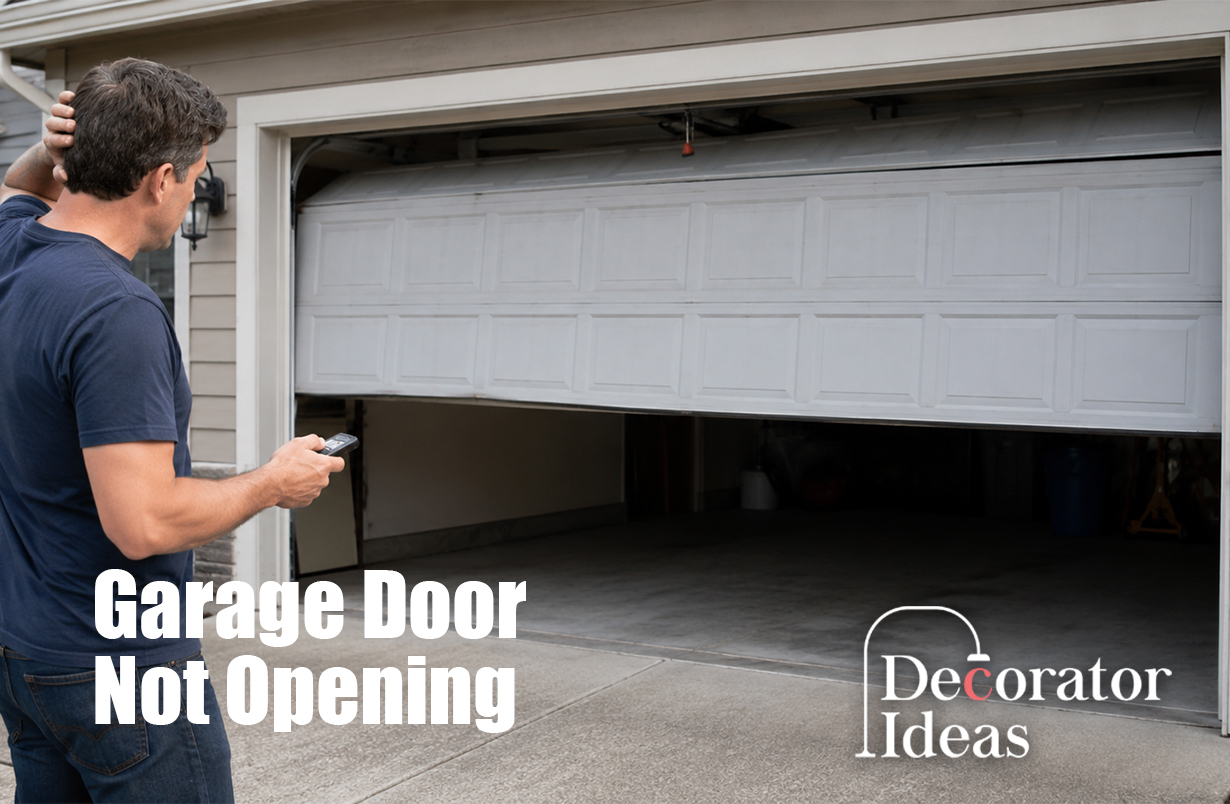
A Garage Door Not Opening can quickly disturb your day, especially when your car is trapped inside. The cause may be simple, such as a dead remote battery, or serious, such as a broken spring. This guide explains the most common causes, safe checks, and clear next steps. Start with the easy tests first, and stop if the door looks uneven, feels very heavy, or has damaged cables.
Check the Garage Door Opener Power Supply
Start by checking whether the opener has power. Look at the motor unit on the ceiling. If its lights are off, make sure the power cord is fully connected. Then check the circuit breaker, wall outlet, and any nearby GFCI outlet. A power cut or tripped breaker can stop the opener completely.
Test the outlet with a lamp or another small device. If the outlet does not work, reset the breaker once. Do not keep resetting it if it trips again. This may show an electrical problem that needs a qualified electrician.
Test the Remote, Wall Switch, and Keypad
Press the wall switch inside the garage. If the door opens from the wall switch but not from the remote, the remote may have a weak battery or lost programming. Replace the battery with the correct type, then test the remote from a short distance.
Also check the outside keypad. Enter the code slowly and make sure no buttons are stuck. If the wall switch, remote, and keypad all fail, the issue may be with the opener, wiring, or power supply. Testing each control helps you find where the problem starts.
Check Lock Mode and the Emergency Release
Many garage door openers have a Lock Mode or Vacation Mode. When this setting is active, the remote may stop working while the wall switch still works. Look for a lock symbol or blinking light on the wall control. Follow the opener manual to turn the setting off.
The emergency release cord can also disconnect the door from the opener. It is usually a red cord hanging from the rail. If the motor runs but the door does not move, the trolley may be disconnected. Reconnect it only when the door is fully closed and stable.
Look for a Broken Spring or Damaged Cable
A broken spring is one of the most serious reasons for a door that will not open. Common signs include a loud bang, a visible gap in the spring, loose cables, or a door that rises only a few inches. The door may also feel much heavier than normal.
Do not try to repair a torsion spring, extension spring, or lift cable yourself. These parts hold strong tension and can cause severe injury. Stop using the opener and call a trained garage door technician. Repeated use can also damage the motor or top door panel.
Inspect the Tracks, Rollers, and Door Panels
Look along both metal tracks for stones, tools, dirt, or bent sections. Even a small object can block a roller. Remove only loose items that are easy to reach. Do not loosen track brackets or hit bent metal while the door is under tension.
Check the rollers and panels as well. Cracked rollers, loose hinges, or a bent panel can make the door stick. If a roller has left the track or the door is leaning to one side, stop operating it. A crooked door may fall or damage the cable system.
Check for Ice, Dirt, or Other Obstructions
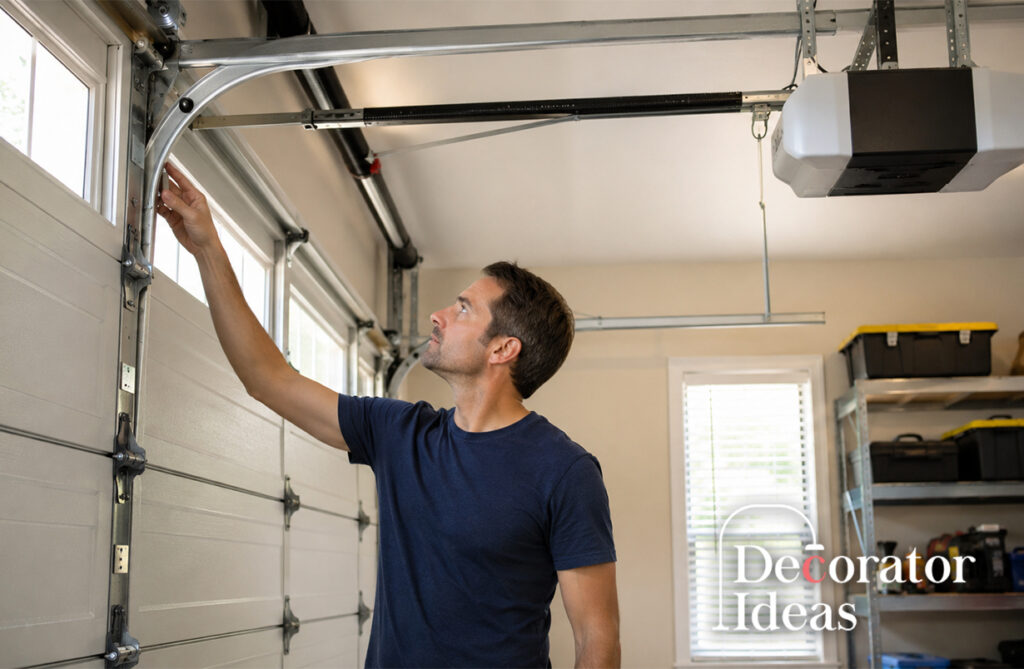
Cold weather can freeze the bottom seal to the floor. If the opener hums but the door stays closed, look for ice around the seal. Use warm air or a safe de-icing product. Do not pour boiling water on the door because it may damage the seal and freeze again.
Also check for paint, mud, leaves, or sticky material under the door. Clean the area gently and dry it well. Never force the opener to pull a frozen door free. Strong pulling can bend the top section or damage the trolley and gears.
Listen to the Opener and Read Error Lights
The sound of the opener can give useful clues. No sound may mean no power. A humming sound may point to a jammed door, broken spring, failed motor part, or locked door. If the motor runs but the door stays still, the trolley, belt, chain, or internal gear may be damaged.
Modern openers often use blinking lights or arrows to show an error. Count the flashes and check the manual for your exact model. Error codes are not the same on every opener, so avoid using instructions for a different brand or model.
Test Door Balance Only When It Is Safe
A balanced garage door should move smoothly by hand. First, close the door fully. Make sure no cable is loose and no spring looks broken. Pull the emergency release, then lift the door slowly to about waist height.
The door should stay near that position or move only slightly. If it drops fast, rises by itself, or feels very heavy, the spring system may be out of balance. Do not adjust spring tension yourself. A professional should correct the balance before the opener is used again.
Check Travel and Force Settings Carefully
The opener uses travel limits to control how far the door moves. If the up limit is set incorrectly, the door may stop before reaching the top. Some openers also use force settings to control how much resistance they allow.
Do not increase the force to push past a stuck door. Extra force can hide a broken spring, frozen seal, bent track, or damaged roller. Check that the door moves freely first. Only change settings by following the instructions for the exact opener model.
Know When to Call a Professional
Stop troubleshooting if the door is crooked, partly open, very heavy, or supported by a loose cable. You should also call a technician if you see a broken spring, bent track, damaged panel, loose opener rail, burned wiring, or a roller outside the track.
A Garage Door Not Opening is not always a safe DIY repair. Simple checks such as replacing batteries or clearing small objects are usually safe. Repairs involving springs, cables, motors, and door balance need proper tools, training, and safety equipment.
FAQs
Why does my garage door opener run but the door does not move?
The emergency release may be disconnected. The trolley, chain, belt, gear, or spring may also be damaged.
Why does the door open only a few inches?
A broken spring, heavy door, bent track, or incorrect force setting may stop it. Stop using the opener and inspect the spring safely.
Can I open a garage door with a broken spring?
You should not try to lift it alone. The door can be extremely heavy and may fall without warning.
Why does the remote work only from a short distance?
The battery may be weak, the antenna may be blocked, or nearby electrical devices may be causing signal interference.
When is a Garage Door Not Opening an emergency?
Treat it as urgent when the door is stuck open, hanging unevenly, has loose cables, or may fall. Keep people away and call a professional.