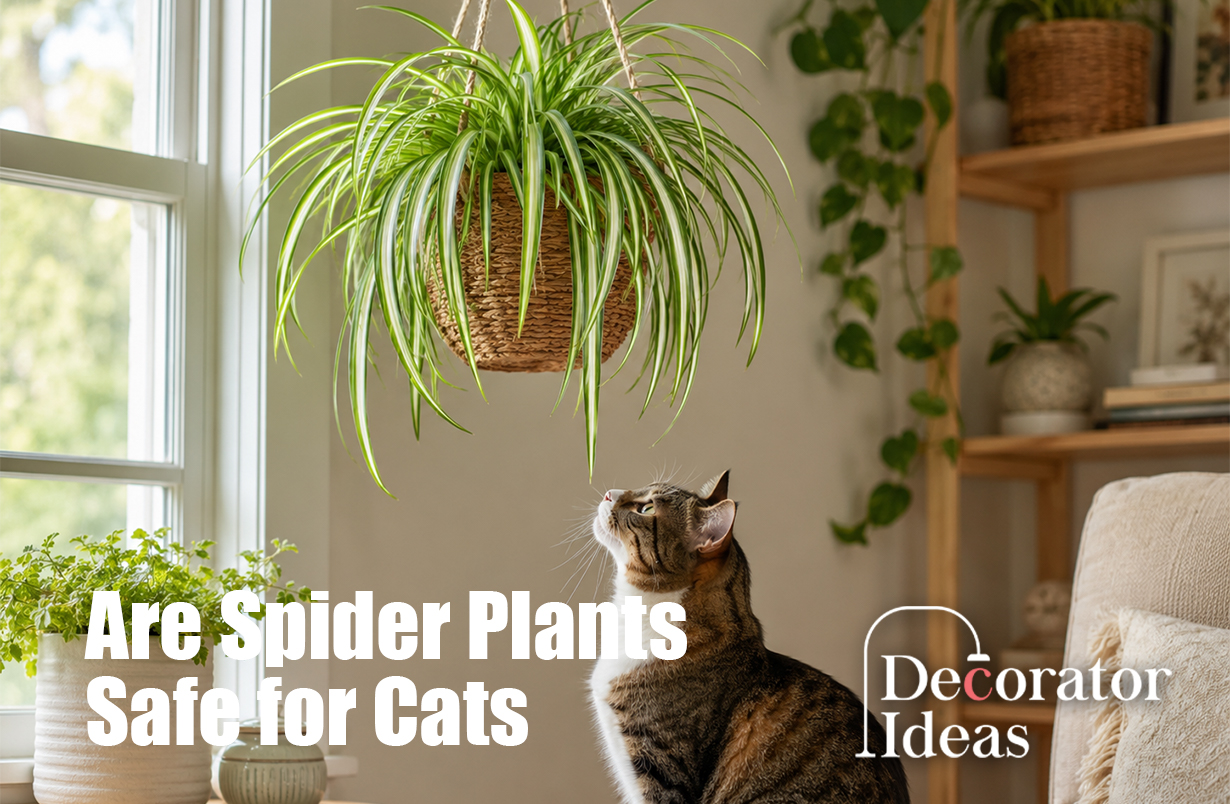
Many people love spider plants because they are attractive, easy to grow, and suitable for hanging baskets. Cat owners may worry when their pets bite the long leaves or play with the small hanging plantlets. So, Are Spider Plants Safe for Cats in a normal home? The good news is that a true spider plant is non-toxic to cats, but eating too much may still cause mild stomach problems.
Are Spider Plants Toxic to Cats?
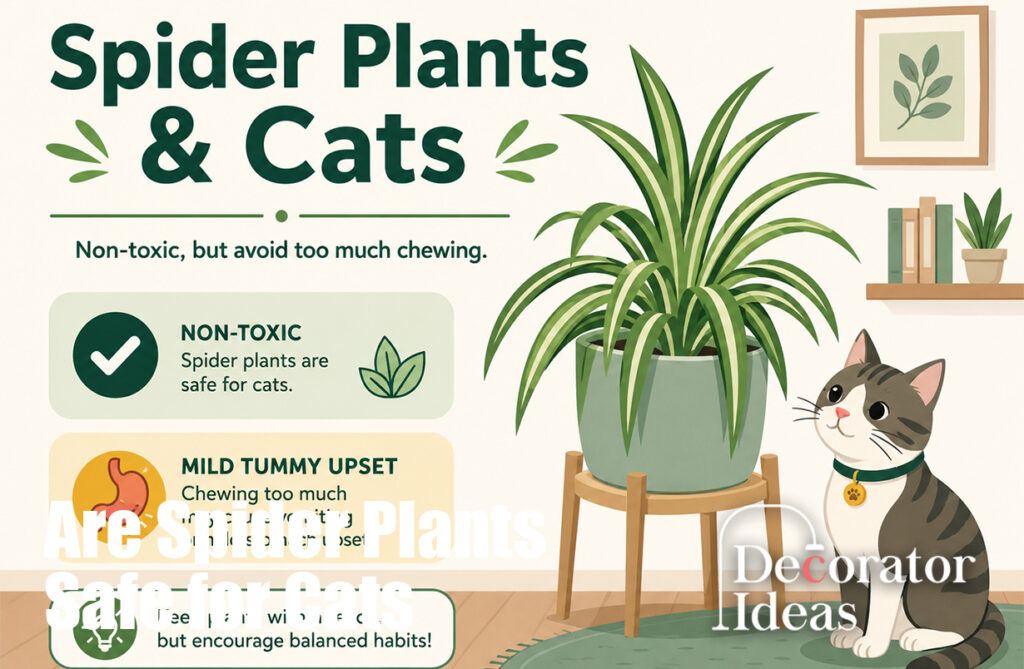
The true spider plant has the scientific name Chlorophytum comosum. The ASPCA lists this plant as non-toxic to cats and dogs. This means it does not contain a known poison that usually causes serious illness, organ damage, or death in cats.
However, the word non-toxic does not mean that cats should eat the plant. Cats are mainly meat eaters, so their bodies cannot easily digest large amounts of leaves. Plant material may irritate the stomach and lead to vomiting, loose stool, or a lower appetite.
What Happens If a Cat Eats a Spider Plant?
A cat that takes one or two small bites will often show no signs of illness. Some cats may have mild stomach discomfort because the leaves contain fiber. Common signs can include vomiting, diarrhea, gagging, drooling, or reduced interest in food.
Problems are more likely when a cat eats many leaves or keeps chewing the plant every day. Long pieces may also be difficult to swallow. Although serious poisoning is not expected, repeated vomiting or diarrhea can cause dehydration and should not be ignored.
Why Are Cats Attracted to Spider Plants?
Spider plants can be very interesting to cats. Their long, thin leaves look like grass and move with very little air. Mature plants also grow small hanging plantlets. These plantlets swing when touched, making them look like toys or small animals.
Cats may chew the leaves because they are curious, bored, or attracted to their texture. Some online claims say spider plants make cats feel “high,” but there is no strong scientific evidence that they cause a hallucinogenic effect. The plant’s movement and grass-like shape are more likely reasons for a cat’s interest.
How Much Spider Plant Is Safe for a Cat?
There is no official safe amount because every cat is different. One small bite from a correctly identified spider plant is unlikely to cause serious harm. However, owners should not allow regular chewing because even safe plants can upset a cat’s stomach.
When asking Are Spider Plants Safe for Cats, it is helpful to separate toxicity from digestion. The plant is not considered poisonous, but a large amount may still make a cat sick. Kittens, older cats, and cats with digestive problems may react more strongly than healthy adults.
When Should You Contact a Veterinarian?
Watch your cat after it eats any houseplant. Contact a veterinarian when your cat vomits several times, has continuing diarrhea, refuses food, becomes very weak, or cannot keep water down. You should also seek help if the cat has breathing trouble, shaking, severe drooling, or poor balance.
These serious signs are not normal after eating a true spider plant. They may mean the plant was identified incorrectly or treated with a harmful chemical. Never force a cat to vomit or give human medicine unless a veterinarian provides clear instructions.
Are Spider Plant Soil and Fertilizers Safe for Cats?
The plant itself may be safe, but the items around it can create other risks. Potting soil may contain fertilizer, mold, insect treatment, compost, water crystals, or small stones. A cat may swallow these materials while digging or chewing near the base of the plant.
Liquid plant food may also collect in the drainage tray. Do not allow a cat to drink this water. Keep fertilizers and gardening chemicals in closed storage, clean spills at once, and follow all product directions. Products called “natural” or “organic” are not always safe for pets.
How to Keep Spider Plants Away From Cats
A secure hanging basket is often the easiest solution. Place it far from shelves, curtains, cupboards, or cat trees that could help the cat reach it. The hook must be strong enough to hold the wet soil and pot because a falling basket could injure a pet.
You can also place the plant in a closed room or use a stable plant cabinet. Give your cat safe choices such as cat grass, puzzle feeders, climbing areas, and daily playtime. Avoid putting essential oils, chili powder, pepper, or strong sprays on the leaves, as these may harm or irritate cats.
Can Kittens Safely Live With Spider Plants?
Spider plants are non-toxic to kittens, but young cats need extra supervision. Kittens explore objects with their mouths and may eat more leaves than an adult cat. They can also pull long stems, knock over pots, or swallow stones and plastic decorations.
Keep hanging cords short and secure so a kitten cannot become trapped. Remove damaged leaves from the floor and cover exposed soil with a safe barrier. A heavy pot should stand on a wide, stable surface where it cannot be pushed over during play.
What Plants Are Commonly Confused With Spider Plants?
Always confirm the scientific name Chlorophytum comosum. Common names can cause confusion because different plants may share similar labels. For example, some Dracaena plants are called ribbon plants, but Dracaena is toxic to cats and may cause vomiting, drooling, weakness, or poor balance.
A spider lily is also not the same as a spider plant. Some spider lilies contain toxic substances. True lilies are even more dangerous because very small exposures can cause severe kidney damage in cats. Check the scientific name instead of trusting only the shop label.
Are Spider Plants a Good Choice for Cat-Friendly Homes?
Spider plants are one of the better choices for homes with cats because they are attractive, easy to care for, and listed as non-toxic. Still, owners should place them carefully and prevent regular chewing. The pot, soil, fertilizer, and hanging equipment must also be safe.
The final answer to Are Spider Plants Safe for Cats is yes, when the plant is correctly identified. A small bite is not usually an emergency, but large amounts can cause digestive problems. Keep the plant out of reach, watch for symptoms, and call a veterinarian when your cat becomes unwell.
FAQs
Can a spider plant kill a cat?
A true spider plant is not expected to cause deadly poisoning. Serious symptoms may be linked to another plant, a chemical product, or an existing health problem.
Why does my cat keep biting spider plant leaves?
The leaves look and move like grass. Cats may bite them because of curiosity, boredom, play, or an interest in their soft texture.
Should I remove my spider plant after one bite?
You usually do not need to remove it from the home. Move it out of reach and watch your cat for vomiting, diarrhea, or unusual behavior.
Are spider plants safe for kittens?
They are non-toxic, but kittens may eat too much, dig in the soil, or pull down the pot. Secure placement and close supervision are important.
Can cats drink water from a spider plant tray?
No. Drainage water may contain soil, mold, fertilizer, or pesticides. Empty the tray and provide fresh drinking water in a clean bowl.